

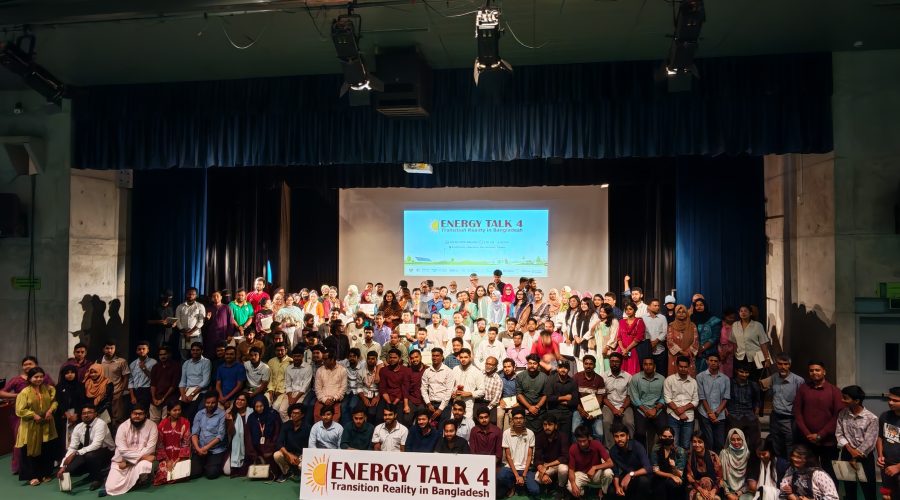
With the aim of promoting a just, sustainable, and renewable energy-based future for Bangladesh, “Energy Talk-4: Transition Reality in Bangladesh” was held today (Saturday) at the auditorium of the Liberation War Museum in Dhaka. The event was moderated by Mir Mohammad Ali, President of the Dream Research and Development Foundation (DRDF) and Assistant Professor at Sher-e-Bangla Agricultural University. The discussion brought together leading energy experts, researchers, and environmental advocates to explore Bangladesh’s current energy landscape, the prospects of renewable energy, the implications of international trade and policy changes, and the role of civil society in advancing a just energy transition.
Speaking on “The Rationale for Energy Transition in Bangladesh,” Shafiqul Alam, Lead Energy Analyst at the Institute for Energy Economics and Financial Analysis (IEEFA), stated that Bangladesh’s energy crisis is driven not only by energy shortages but also by the growing risks associated with import dependency. He emphasized that expanding renewable energy, improving energy efficiency, and maximizing the use of domestic resources offer the most effective pathway toward a sustainable energy transition. He further noted that the present moment provides a critical opportunity to accelerate the country’s transition to clean energy.
On the topic of “The Potential Impact of Agreement on Reciprocal Trade on Energy Transition,” Dr. Moshahida Sultana, Associate Professor at the University of Dhaka and an energy researcher, remarked that energy policy extends far beyond technology and economics. It is closely intertwined with trade, geopolitics, and national interests. She stressed that any international trade agreement should reinforce Bangladesh’s long-term energy security and support the country’s transition to renewable energy.
Addressing “The Energy Transition Movement,” Sharif Jamil, Coordinator of Waterkeepers Bangladesh and Member Secretary of Dhoriitri Rokhhay Amra (DHORA), said that energy transition is not an unrealistic aspiration but an urgent necessity for Bangladesh. He highlighted the need for collective action to move away from fossil fuel dependence, pollution, and climate risks toward a renewable energy-based, equitable, and sustainable future. He further stated that development projects that destroy nature, hurt public health and threaten people’s livelihoods can never be considered as a sustainable effort. Therefore, Bangladesh’s energy transition movement must seek clean, just, and equitable transition to renewables. He emphasized that this movement is not the agenda of one or two organizations, but a shared commitment of all wisdom to building a safer planet for future generations.
The event was attended by energy experts, researchers, university faculty members and students, development practitioners, environmental activists, youth leaders, and representatives from various partner organizations. Each presentation was followed by an interactive question-and-answer session and open discussion. Speakers underscored the importance of expanding renewable energy, introducing policy reforms, strengthening research, facilitating technology transfer, and enhancing public participation to make Bangladesh’s energy sector more transparent, sustainable, environmentally friendly, and climate-resilient.
The programme was organized by Waterkeepers Bangladesh and Dhoritri Rokkhay Amra (DHORA). The organizers announced that the Energy Talk series will continue to be organized to strengthen public awareness, research, and policy dialogue on just and sustainable energy transition in Bangladesh, while also increasing meaningful youth engagement in shaping the country’s clean energy future.


