

Nationwide Protests in Bangladesh Demand Debt Justice and Fair Climate Compensation
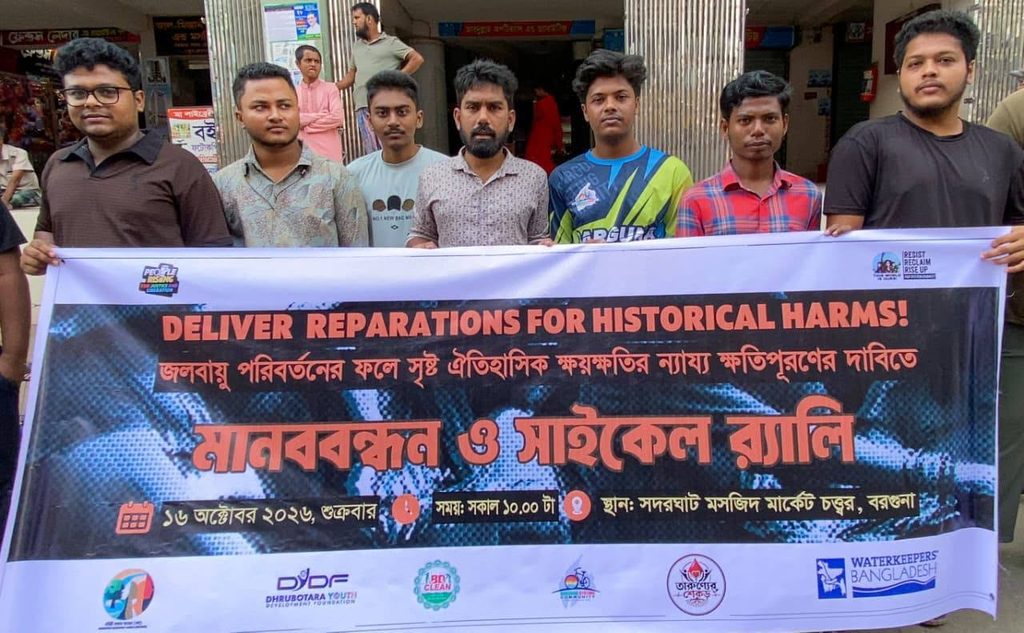
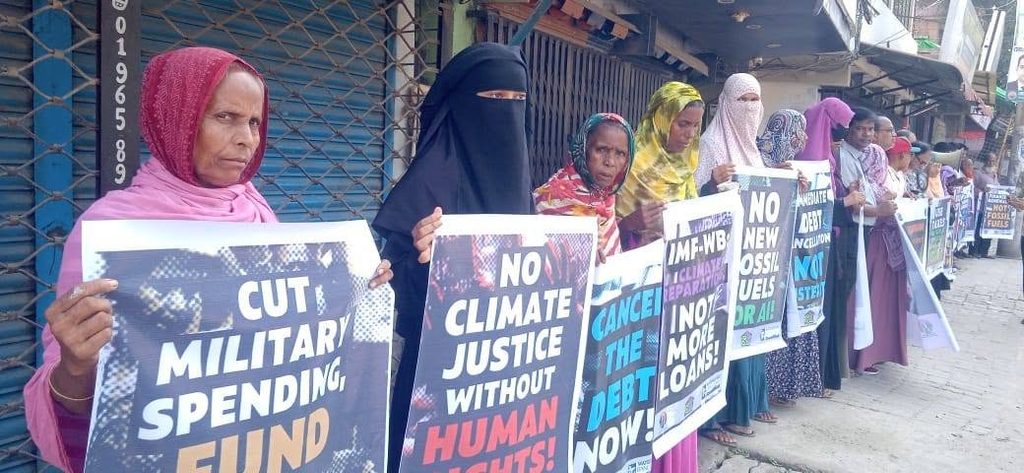
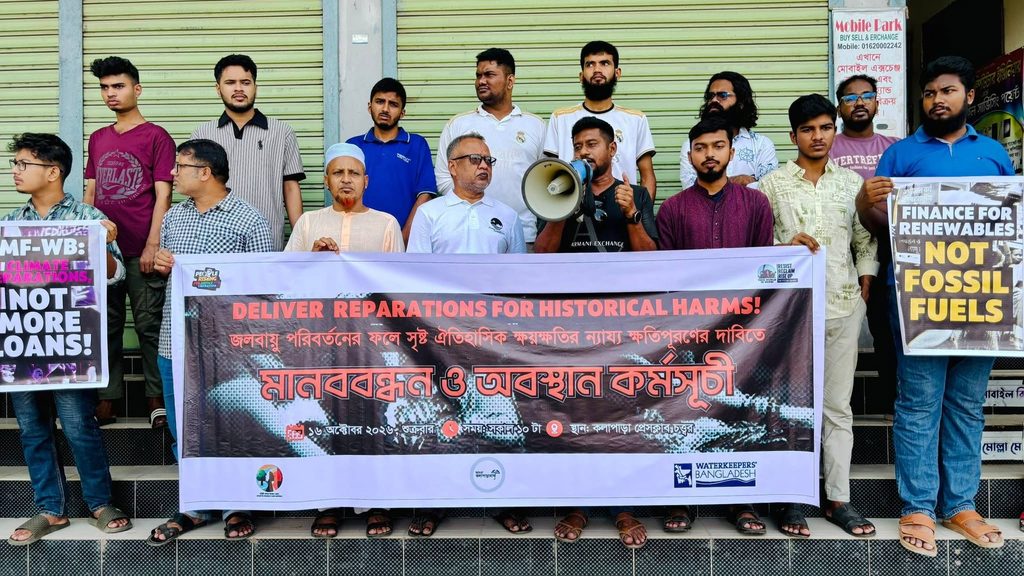
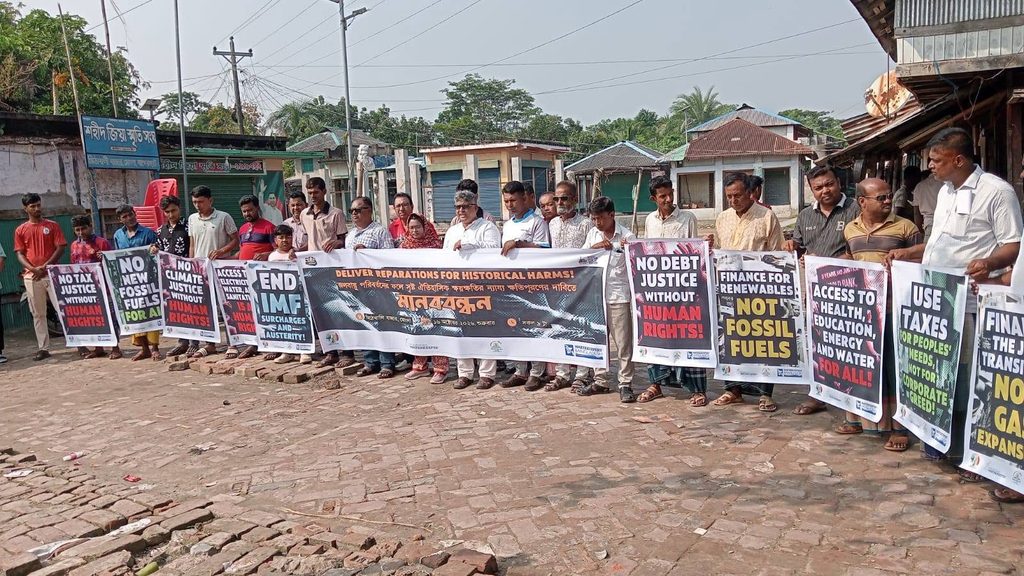
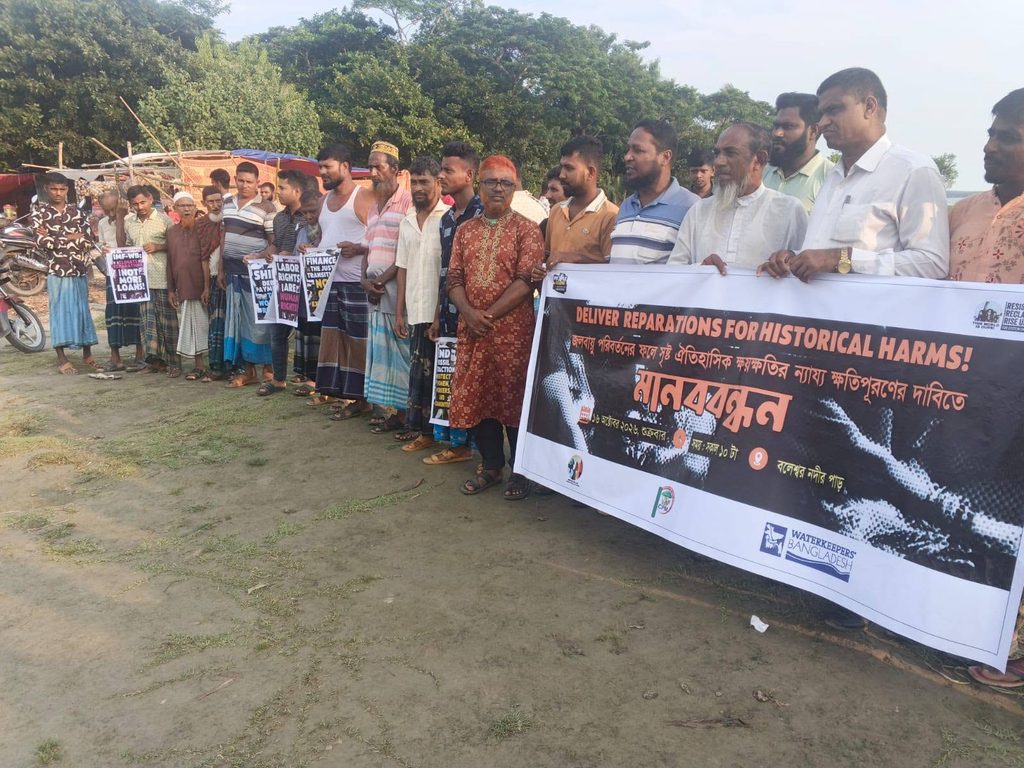
16 October 2026: Protests and human chains were held across Bangladesh, demanding an end to global inequality and climate injustice, fair compensation for climate-induced loss and damage, debt justice, and protection of working people’s rights.
A central human chain took place in front of the National Press Club in Dhaka at 10:00 am on Friday, organised by 36 civil society and social organisations led by Waterkeepers Bangladesh and Dhoritri Rakhhay Amra (DHORA). Similar programmes were organised by local organisations in Barguna Sadar, Kalapara, Taltali, Patharghata, Kutubdia, Pekua (Cox’s Bazar), Mongla, Pabna, and Jamalpur.
The protests coincided with the IMF–World Bank Annual Meetings in Bangkok, Thailand, held from 12 to 18 October 2026. Speakers criticised the profit-driven global economic system and debt-based climate finance, demanding that historically high-emitting countries provide fair compensation to climate-vulnerable nations and affected communities through grants rather than loans.
Speakers at the Dhaka programme included Nikhil Chandra Bhadra, Coordinator of the Sundarbans and Coastal Protection Movement; Md. Ikbal Faruk, Head of Research at Waterkeepers Bangladesh; Badrul Alam, President of the Bangladesh Krishok Federation; Mir Mohammad Ali, faculty member and researcher at Sher-e-Bangla Agricultural University and Chairman of the Dream Research and Development Foundation; and Farzana Urmi of the Gorjon Social Welfare Organisation, among others.
Across the country, participants called for reducing foreign debt burdens and prioritising public spending on education, healthcare, agriculture, and social protection. They also demanded grant-based climate finance, protection of farmers’ and coastal communities’ livelihoods and land rights, access to safe water and food, and greater investment in renewable energy.
Speakers further stressed that climate adaptation and reconstruction must not deepen debt or exclude affected communities from decision-making.
The programmes concluded with a call for a just and equitable economic system that puts people, climate justice, and environmental protection first.