

Call for a Rapid Transition to Renewable Energy to Protect Rivers on World Rivers Day
27 September 2026: On the occasion of World Rivers Day 2026, various programmes were organised in coastal areas across Bangladesh under the theme “Renewable Energy Now to Save Rivers”, calling for an end to river encroachment and pollution, protection of natural river flow and navigability, and a rapid and just transition to renewable energy to reduce dependence on fossil fuels.
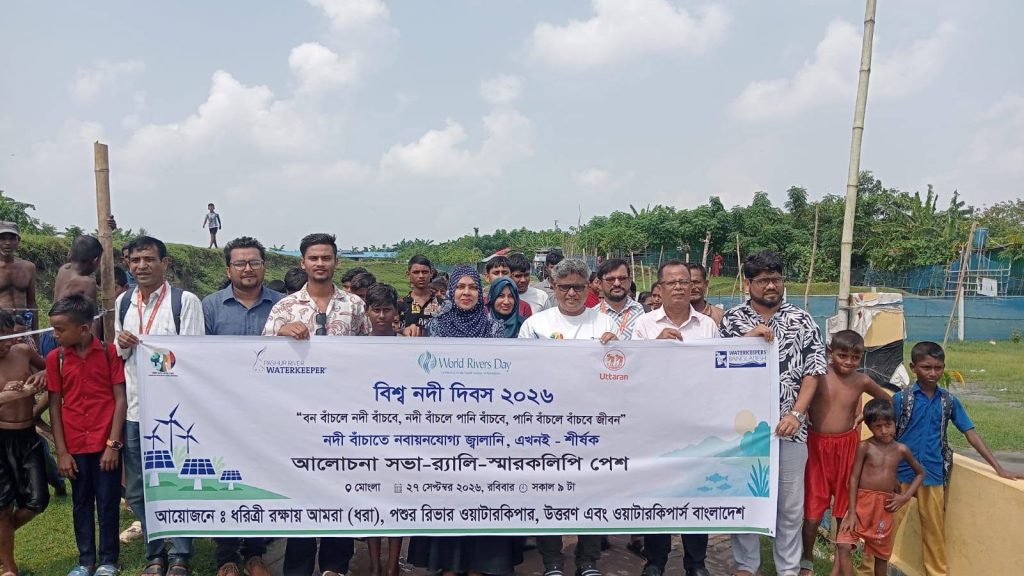
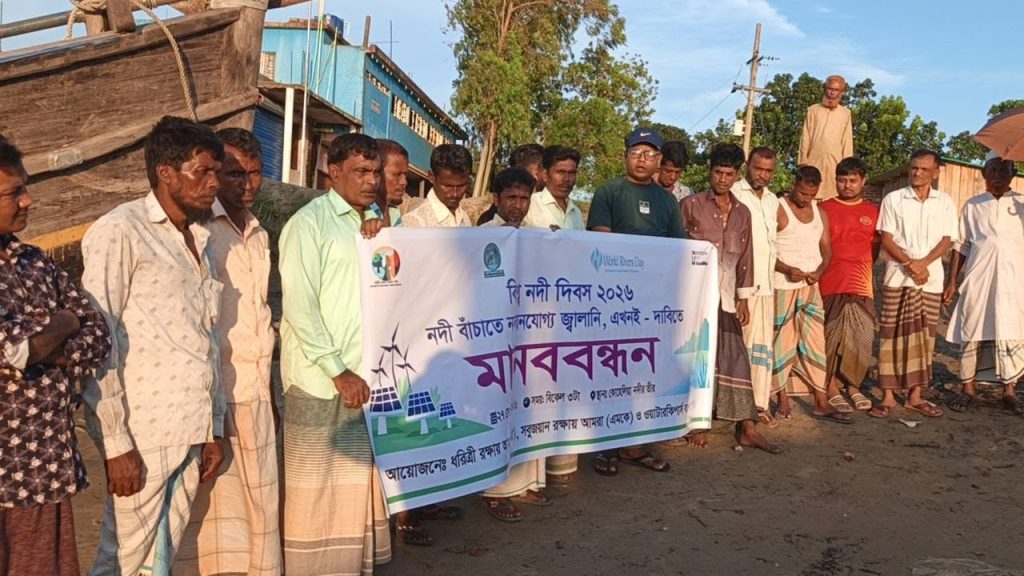
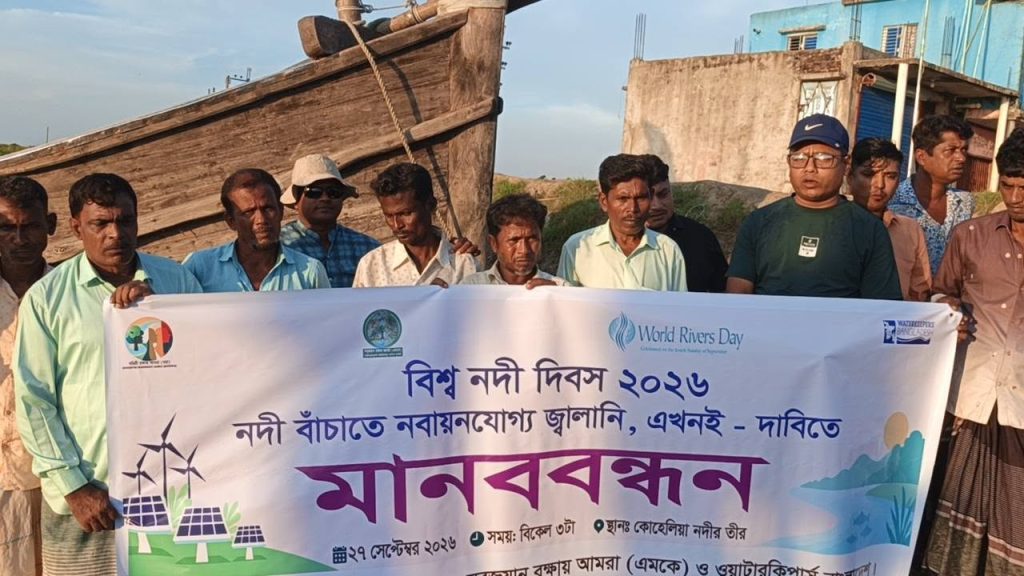
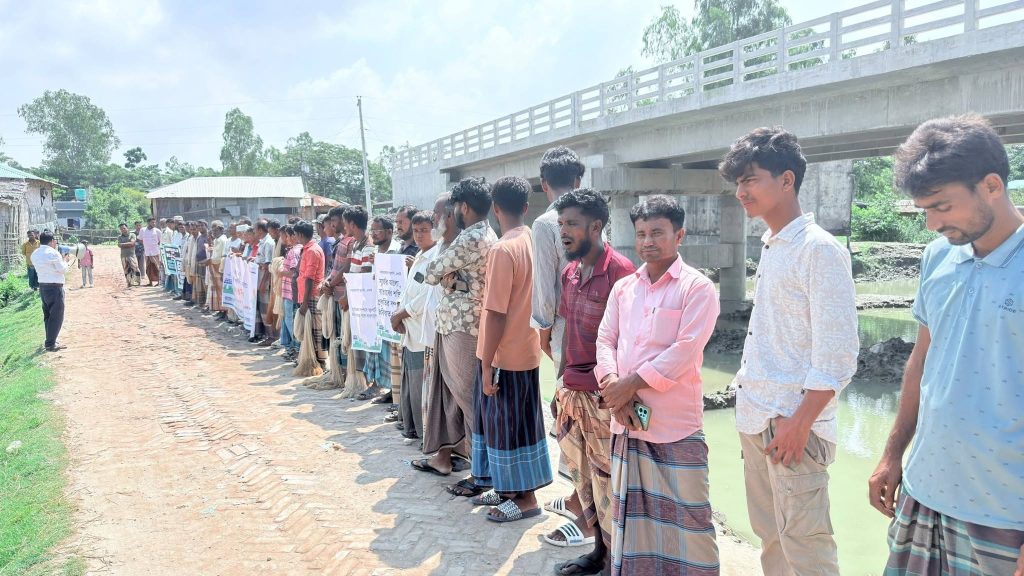
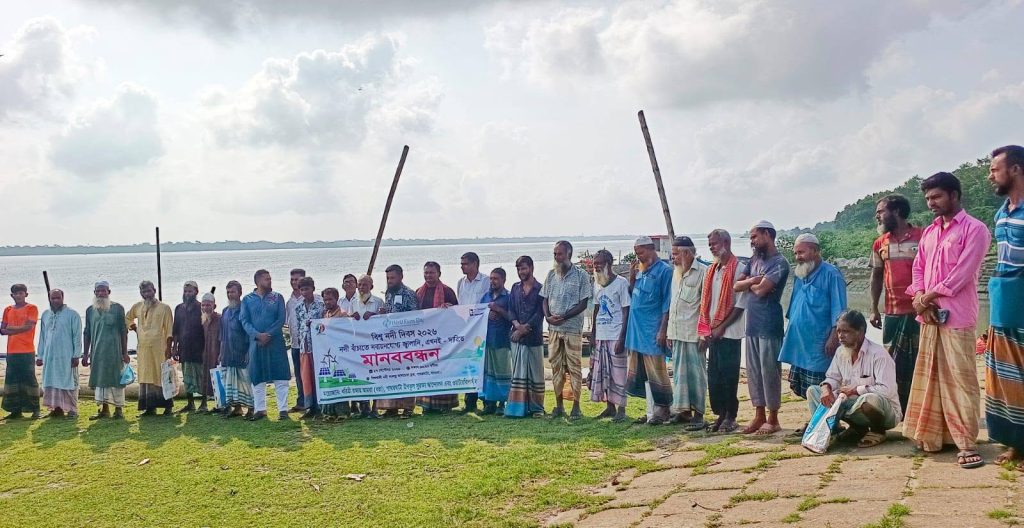
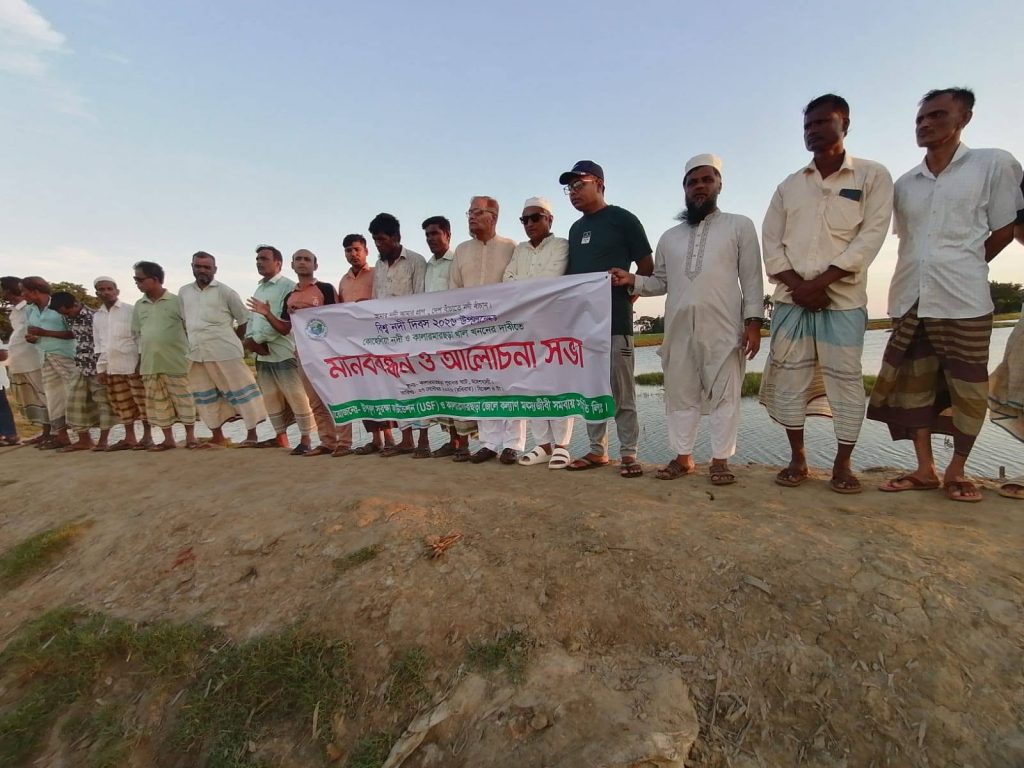
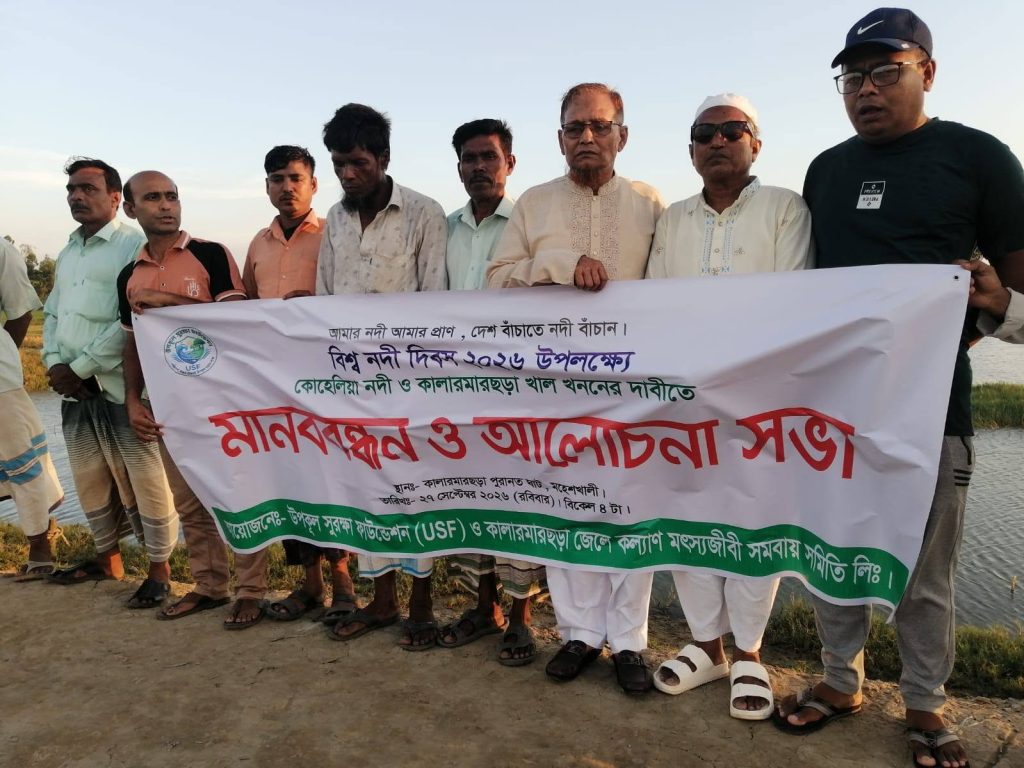
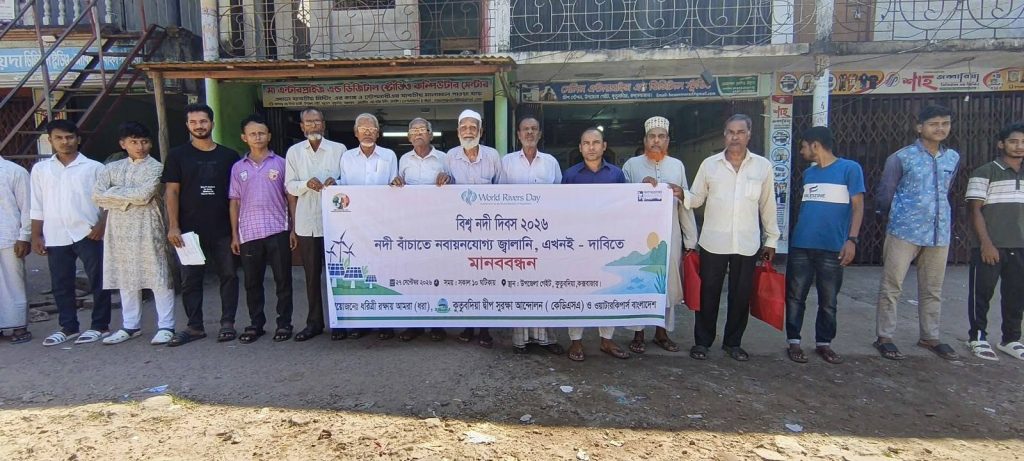
With the support of Dhoritri Rokhhay Amra (DHORA) and Waterkeepers Bangladesh, and through initiatives by local organisations, human chains, discussions, rallies and memorandum submissions were held at nine locations across the country, including Kalapara in Patuakhali, Patharghata and Taltali in Barguna, Mongla, Kutubdia and Pekua in Cox’s Bazar, Moheshkhali, and Barguna Sadar.
In Patharghata, participants organised a human chain on the bank of the Bishkhali River, calling for an end to river encroachment and pollution and for increased use of renewable energy.
In Kalapara, participants demanded the demarcation of the Andharmanik River, an end to encroachment and pollution, removal of brick kilns along the riverbanks, and measures to prevent pollution from coal-fired thermal power plants located near the river.
In Kutubdia, participants called for an end to encroachment and pollution of the historic Pilotkata Canal and urged the restoration of its natural flow.
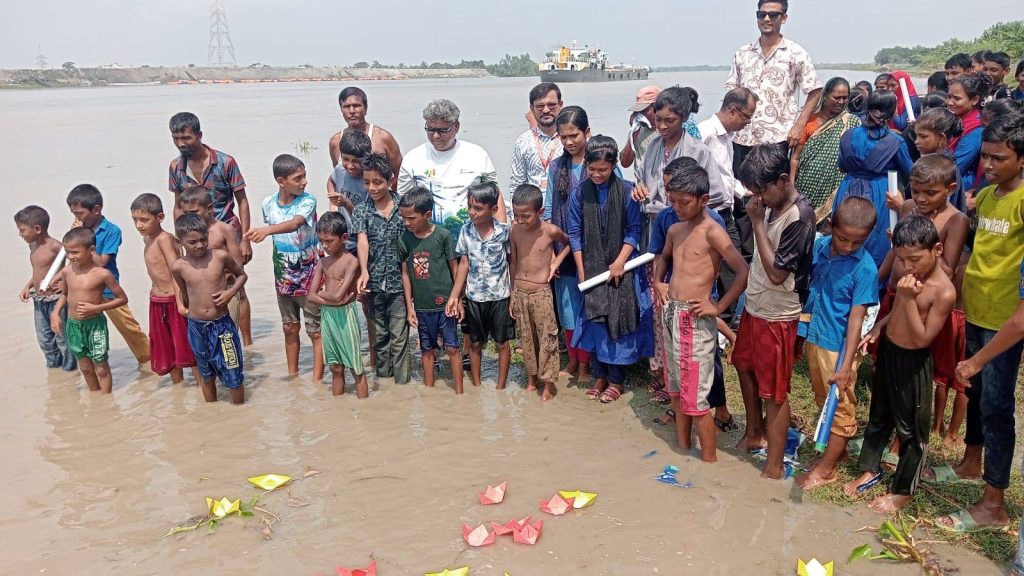
In Mongla, a range of activities was organised, including scattering flowers into the river and floating symbolic paper boats. Speakers called for reducing dependence on fossil fuels and ensuring a rapid and just transition to renewable energy to protect rivers, the Sundarbans and aquatic biodiversity.
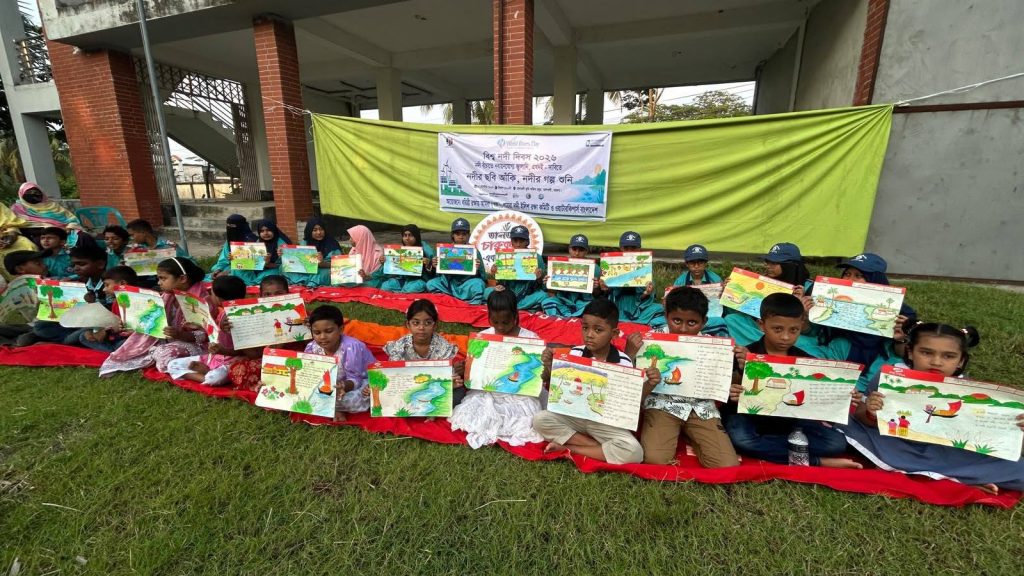
Similar programmes were organised in the other locations, where participants raised demands for river protection, an end to encroachment and pollution, restoration of navigability and natural flow, and safeguarding the livelihoods of river-dependent communities.
The World Rivers Day programmes highlighted the urgent need to protect rivers from encroachment and pollution, preserve their natural flow and navigability, safeguard river-dependent communities and aquatic biodiversity, and accelerate a rapid and just transition to renewable energy as part of efforts to reduce dependence on fossil fuels.